
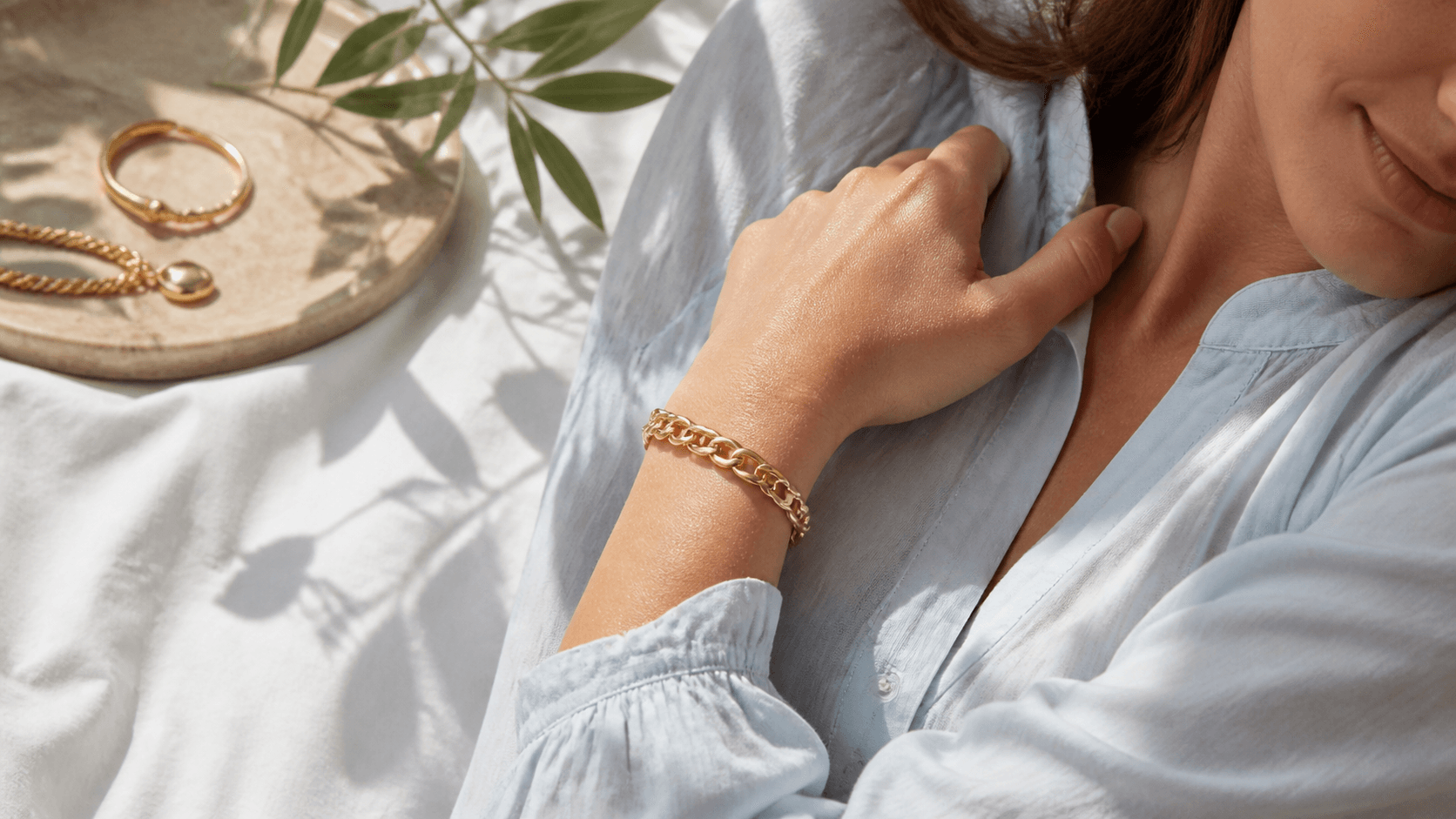
Summer fabrics like linen, silk, and light cotton help us stay cool in the Dallas, Texas, heat, but they aren't always easy to wear with jewelry. If you've ever had a bracelet snag your sleeve while reaching for a drink or brushing your hair away from your face, you know how frustrating it can be. The wrong jewelry can pull threads, leave marks, or catch just enough to make getting dressed feel like a struggle.
That doesn't mean skipping your favorite accessories. A heritage bracelet can still be part of your summer wardrobe if you pay attention to how it's made. The right fit, smooth edges, and smart materials can make a big difference when pairing heirloom pieces with warm-weather clothing.
Why Summer Fabrics and Jewelry Don't Always Get Along
Warm-weather outfits usually rely on fabrics that breathe and move easily. Those same features make them more likely to get caught on textured or detailed jewelry.
- Gauze, rayon, linen, and silk are common choices for summer, but they tend to have open fibers or fine weaves. That means they can snag easily on sharp designs or rough edges.
- Bracelets made with woven metal, basket styles, or open filigree can drag or pull when worn with lightweight tops or dresses.
- Prong-set stones, especially those that sit high, may brush against sleeves or catch near zippers and seams. It only takes one snag to damage your clothing or knock a stone loose.
- Extra dangling pieces, like charms or layered chains, get tangled more often on loose-fit styles like bell sleeves or off-the-shoulder tops.
When we pick a bracelet for warm weather, we try to spot these hazards early. Steering clear of rough textures or raised details helps keep our fabric (and jewelry) safe and snag-free.
On our website, we introduce heritage bracelet designs with rounded settings and polished inner seams, which are less likely to snag on delicate summer fabrics compared to high-profile prong or basket settings.
Picking the Best Fit and Finish for Hot Weather
One of the easiest ways to avoid fabric trouble is to focus on shape. A clean, polished structure goes a long way.
- Closed-link chains, such as snake or rounded box styles, sit flat and smooth against the skin. They don't have open gaps that grab tiny threads.
- Rounded edges and soft polish keep your bracelet from catching or leaving marks. Even a small corner can tug on a loose knit or a delicate blouse if it isn't smooth.
- Sleek cuff bracelets can be a good swap for clasped chains if you're wearing a flowy sleeve. They're easier to slide on without twisting fabric or fumbling with closures.
- Layered looks still work, but we go for simple stacking with similar textures and shapes. That way, the pieces move together, not against one another.
The goal is comfort. If we can't move our arm freely without checking our sleeves or adjusting the fit, it's time to switch designs.
Our product pages feature flexible sizing on bracelet designs, plus hand-finishing and smooth satin or high-polished surfaces, to make pieces wearable in any season and softer against skin and clothing.
Materials That Stay Cool and Comfortable
Some bracelet materials just work better when it's hot out. The way something feels on your skin matters as much as how it looks.
- Lightweight metals like titanium or fine gold don't hold as much heat, making them comfier against warm skin.
- Smooth stones, like polished quartz, jade, or agate, keep cool and tuck easily up the wrist. They're less likely to scratch or press into fabric.
- Leather or silk cord bracelets are less reactive to temperature changes. They stretch and shift a bit with movement but won't poke or shift in uncomfortable ways.
- Mixed-material designs, like a single strand of beads strung on soft rope or metal blended with fabric or thread, can feel softer all around. They aren't just prettier. They help reduce the weight and friction against summer clothing.
We stay away from high-gloss metals when possible during sunny days. They can heat up fast under direct sun and lose their comfort quickly on midday outings.
Design Features That Make a Heritage Piece More Wearable
Just because a heritage bracelet has sentimental value doesn't mean it has to stay in the box all season. Some traditional touches actually make them easier to wear day to day.
- Look for lower-profile designs, especially if sleeves are part of your outfit. Rounded or flush-set stones won't snag the way pronged styles can.
- Hidden clasps are another great touch. They reduce the number of moving parts that can grab fabric, and they often hold better than open hooks or toggles.
- Clean structure always wins. If we're working with a piece that has fine detail, we aim for those where the texture is more inside the design rather than sticking out from it.
Sometimes, it's the simplest design that holds up the best. That doesn't mean plain, it just means balanced. A piece that's been made with wear in mind feels better on and looks just as meaningful in motion.
Style That Moves With You All Summer
In Dallas, summer days start early and stretch into warm evenings. Whether you're out for dinner or spending time on a porch swing, the right jewelry takes the heat in stride. When we think about wearing a heritage bracelet all day, we think about how it will sit, breathe, and shift with what we're wearing.
Bracelets with smooth finishes, gentle weight, and flexible fit let us dress freely. From linen jumpsuits to soft T-shirts and easy cotton dresses, a thoughtfully chosen piece becomes part of our summer rhythm, not a piece we fuss over. When it's built with care and worn with comfort in mind, it fits right into the season.
We love how summer style in Dallas gives us room to play with texture, comfort, and pieces that carry personal meaning. A well-chosen heritage bracelet can add that thoughtful touch without getting in the way of your favorite light fabrics. From polished finishes to soft shapes, the right design lets you move with ease and still keep something sentimental close. At L'Heritage Fine Jewelry, we are here to help you find something you will actually want to wear all season. Reach out and get started on a design that fits both your style and the summer.


