Introduction
When the Dallas, Texas, summer kicks in, we usually think about heatwaves, high humidity, and cranking up the air conditioning. But there's one spot that often gets overlooked, where we store our jewelry. That well-made box fine jewelry case on your dresser or closet shelf might look like it's holding up just fine, but warm temperatures and moisture can slowly change the way it behaves. Over time, heat can wear down materials and shift how the case seals, moves, and protects the jewelry inside.
Even small changes in shape or structure can lead to damage that's hard to undo. That's why it's worth paying attention to how the summer heat affects your jewelry case. Knowing what to look for and what to avoid can help keep your keepsakes safer, longer.
What Summer Heat Really Does to Materials
Jewelry cases aren't one-size-fits-all. Most are made with a mix of wood, leather, velvet, plastic, or similar materials. And each one reacts differently when the temperature rises.
- Wood tends to swell or shrink depending on humidity. Hot air can dry it out, making it prone to cracking, warping, or splitting at the seams.
- Leather can dry or stiffen in the heat, especially if it's real and not treated. Over time, it may feel brittle, lose its texture, or even start to peel.
- Velvet and other soft linings aren't immune either. With too much heat or moisture, the fabric might loosen, shrivel, or wrinkle, shifting out of place and leaving your jewelry with less padding.
- Plastic or acrylic parts may seem the most durable, but they can warp too. High heat can change the shape slightly, especially on hinges or sliding components.
These little shifts don't always happen all at once. You may not notice a thing until months later when lids don't close properly, drawers stick, or linings move when you open the case. That's why catching early signs matters.
On our website, our jewelry boxes are constructed with a sturdy structure and soft, protective interiors designed to resist environmental wear. Product descriptions note the use of quality linings and materials intended for heirloom storage in Texas climates.
Why Warping Affects Jewelry More Than You'd Think
When we picture damage to jewelry, we usually think of scratches or breaks from wearing it. But a warping box can pose trouble even when the jewelry's not in use.
- If the case doesn't seal evenly anymore, dust and humidity can sneak in. That grime builds up slower than a spill might, but long-term, it can dull metals and weaken clasps.
- Warped drawers or trays may cause bracelets, earrings, or necklaces to shift. A small chain that slips out of place can tangle or rub against harder edges.
- Loose clasps, sliding lids, or hinges that no longer close flush can change how secure a case feels. If you can't depend on it to stay locked or steady, it's easier to misplace or damage something important.
Having a box fine jewelry case that holds its shape gives you the peace of mind that comes with real protection. When that promise slips, so does the safety of the jewelry it's meant to hold.
Where You Keep Your Case Matters
Even if your case seems sturdy and made to last, where it lives during the summer has a big effect on how well it performs. The inside of a case heats up faster than we think, especially when placed in the wrong spot.
- A sunlit shelf or dresser near a window can trap heat during the day. Those sunbeams may look pretty, but they can slowly turn the box into a tiny oven.
- Attics and enclosed closets without airflow hold onto heat. It might not feel dramatic day-to-day, but over the weeks and months of summer, gentle warmth adds up.
- Surrounding airflow matters too. Keeping a case near a vent or AC unit can lead to sudden temperature changes that impact materials, even if they're not direct heat sources.
Being mindful about placement helps prevent gradual damage. Even moving a case to a slightly cooler part of a room or storing it in a shaded drawer can make a difference when the Dallas heat lingers all season long.
Subtle Signs of Trouble to Watch For
A jewelry box doesn't usually scream when something's wrong. Most changes are pretty quiet, so we need to know what to look for before things go too far.
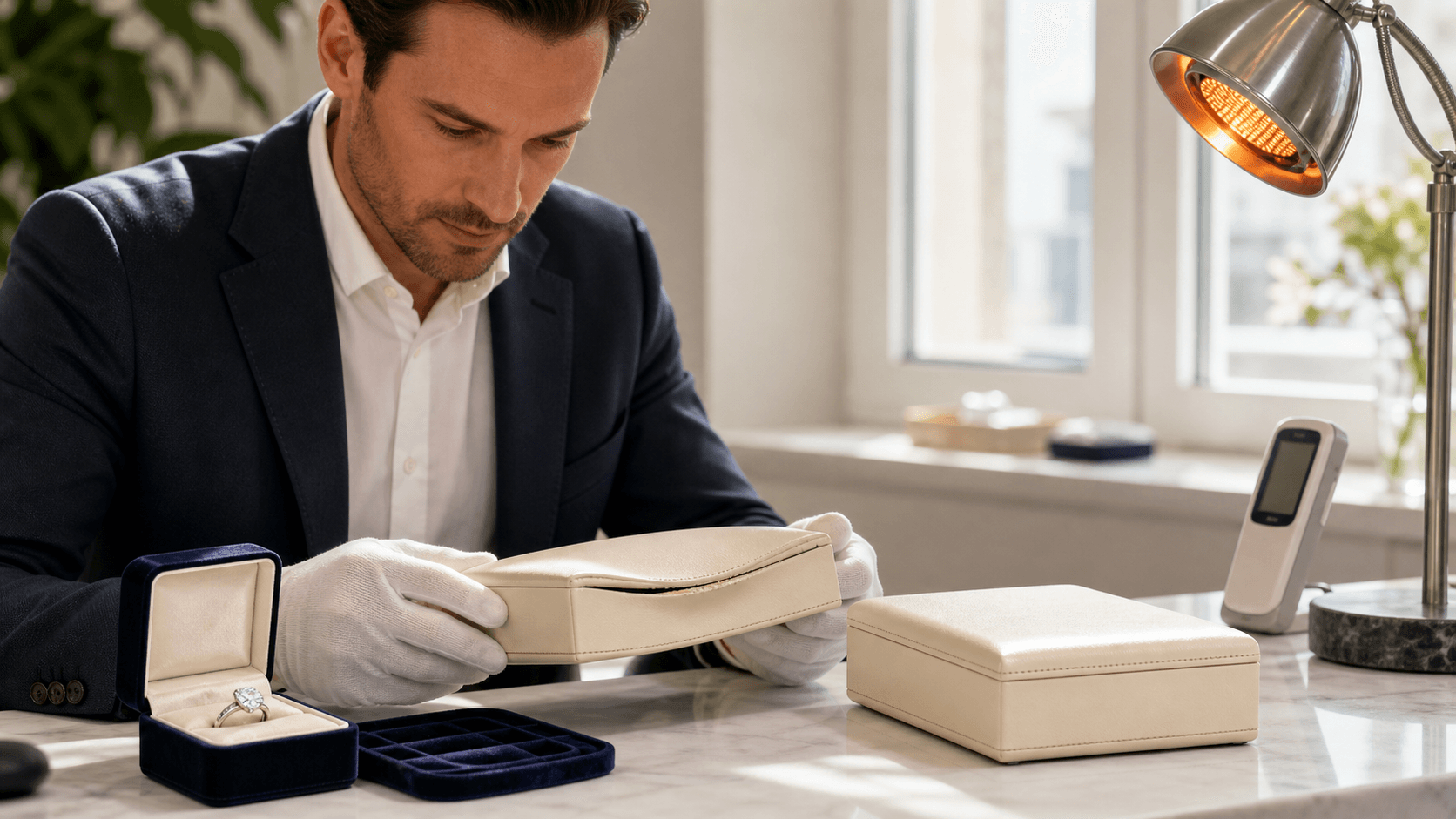
- Warped corners or lids that don't sit flush are among the first signs. If something used to close tightly and no longer does, summer heat might be the reason.
- Sticky drawers, tight trays, or spaces that feel misaligned can point to internal shifting. Linings that feel bumpy, loose, or over-softened might mean fabric or foam has expanded or lifted.
- Odd smells like glue, mustiness, or mildew are red flags. Sometimes moisture gets trapped inside, especially after a humid day, and the result shows up in scent before sight.
Even if you only open the case now and then, giving it a closer look during hotter months can save you from storing your jewelry inside something that's no longer doing its job.
On our product pages, we mention the removable modular trays designed for easy cleaning and inspection, features that make it easier to spot small issues before they become big problems each summer.
Protecting Jewelry for the Long Haul
Keeping jewelry safe isn't just about the looks. It's about what the pieces mean and who they're connected to. That's why guarding against summer heat makes a difference.
- Choosing a cool, dry location for storage helps prevent slow damage. Whether it's a darker part of your bedroom or a drawer that doesn't sit near direct light, you may have better options than a windowsill or open shelf.
- Checking your jewelry case once each season is worth the time. Make sure drawers still slide smoothly, linings sit flat, and everything feels and smells right.
- If something seems off, like a hinge acting differently or a drawer difficult to close, it's better to check now than pass it off as no big deal.
Taking small steps today helps your box fine jewelry case last longer and do exactly what it's meant to protect the pieces tied to your favorite people and moments. Summer brings its own challenges, but with a little awareness, you can make choices that keep your jewelry, and its meaning, safe.
Keep Your Collection Safe Year-Round
Dallas, Texas, summers can quietly wear down even the best-made jewelry boxes. Paying attention to where you store your case, recognizing the signs of wear, and choosing smart storage solutions can save you from heartache and costly repairs in the months ahead.
At L'Heritage Fine Jewelry, we know the relentless Texas heat can quietly affect even your most reliable storage cases. Taking time to check your jewelry box during the summer can make a big difference. If you notice the materials aren't holding up or seals are failing, upgrading could be the best way to protect your collection. The right Box Fine Jewelry adds year-round security for your cherished pieces in Dallas. Reach out to us today to discuss how we can help keep your jewelry safe and looking its best.